
Money · 28 guides
Keep the lifestyle. Cut the financial waste.
This shelf is for decisions where the cheapest answer can be as irrational as the most expensive one. The goal is to identify the full cost, protect flexibility, and spend through the point where additional money stops changing the outcome.
- Build a repeatable buying and deal-checking system
- Price risk, depreciation, warranties, and exit value
- Spend confidently without confusing premium with progress
Best starting points
Build the foundation first.

The Mr ROI operating system: the exact order I would optimize a life
A practical order for improving money, career, health, home, technology, and quality of life without turning optimization into the point of life.
Read the guide →
My online buying system: verify the sale before you buy the product
A complete buying workflow for product fit, price history, used and open-box options, sourcing channels, stacked savings, protection, and landed cost.
Read the guide →The complete shelf
More money decisions.
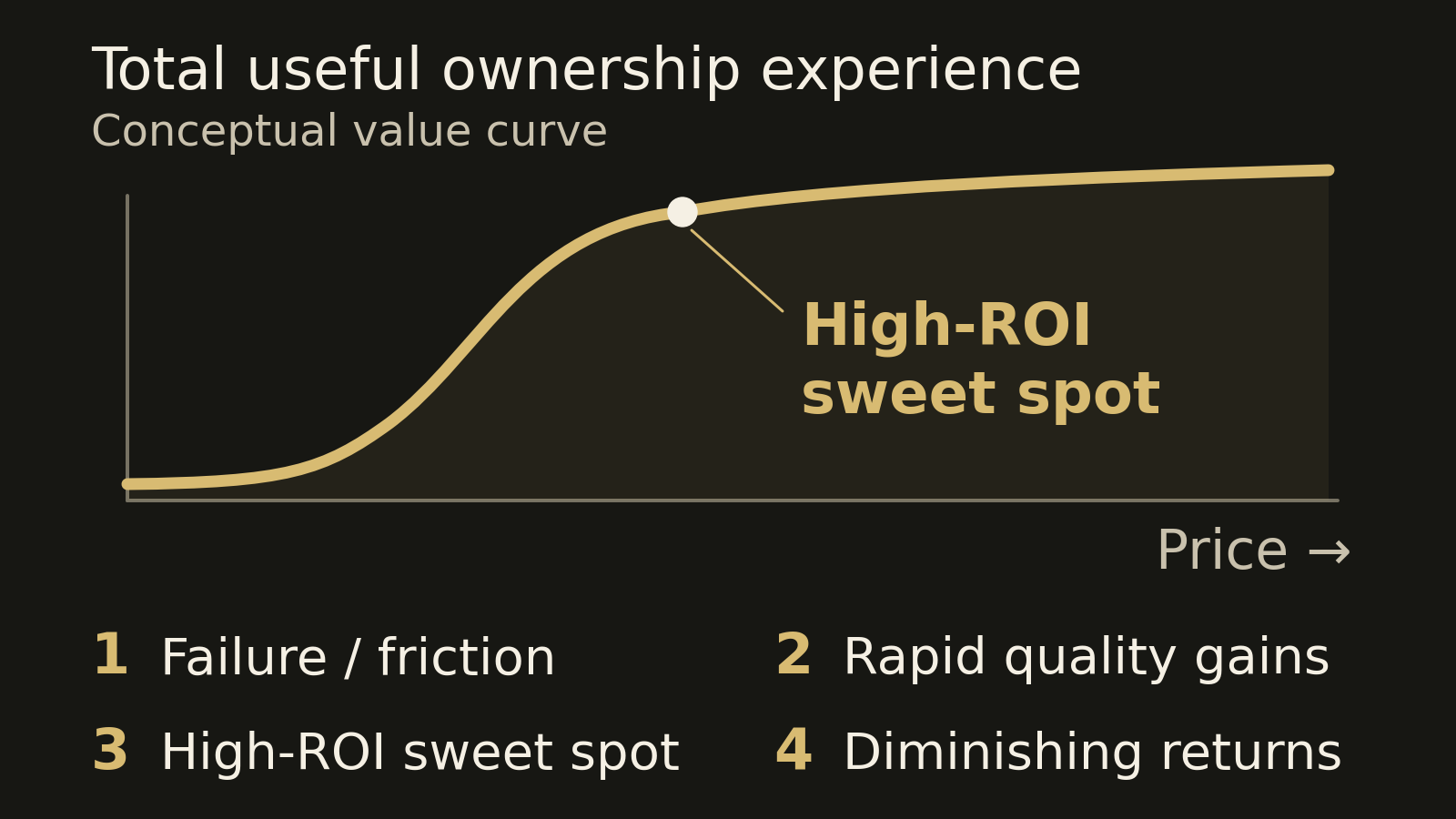
The false economy: why the cheapest option can cost more
The lowest upfront price can hide replacement, downtime, hassle, risk, and lost utility. This framework shows when spending more is rational, when premium is waste, and where the value curve actually bends.
Read the article →
Avoid Ruin First: The Decisions That Can Cost You Years
A handful of bad decisions can overwhelm years of good ones. Protect the options that let future progress compound.
Read the article →
Don't Avoid Long Odds. Avoid Bad Games.
A low success rate does not tell you whether you are looking at a difficult opportunity or a bad game.
Read the article →
How I Get Cheap iPhone Upgrades by Switching Carriers
Carrier loyalty can be expensive. I periodically compare what another carrier will pay to win our lines, and several times that has made upgrading our iPhones dramatically cheaper than buying them normally.
Read the article →
How to spot a bullshitter: proof, hidden subsidies, and fake expertise
A young founder, creator, applicant, or consultant can look rich and authoritative without revealing capital sources, net economics, experience duration, or whether their claims survive a basic change request. Here is how I separate presentation from proof, including my own.
Read the article →
My Credit Card Stack: How I Capture Most of the Rewards Without Turning It Into a Hobby
A low-overhead wallet built around realized cash value, annual-fee break-even math, selective transfer-partner checks, and the discipline to add nothing when another card would create more work than return.
Read the article →
The Durability Threshold: When Paying More Actually Costs Less
A real-world field guide to clothing, boots, cookware, vacuums, tools, cables, hoses, food storage, and the modest price step where product architecture finally changes.
Read the article →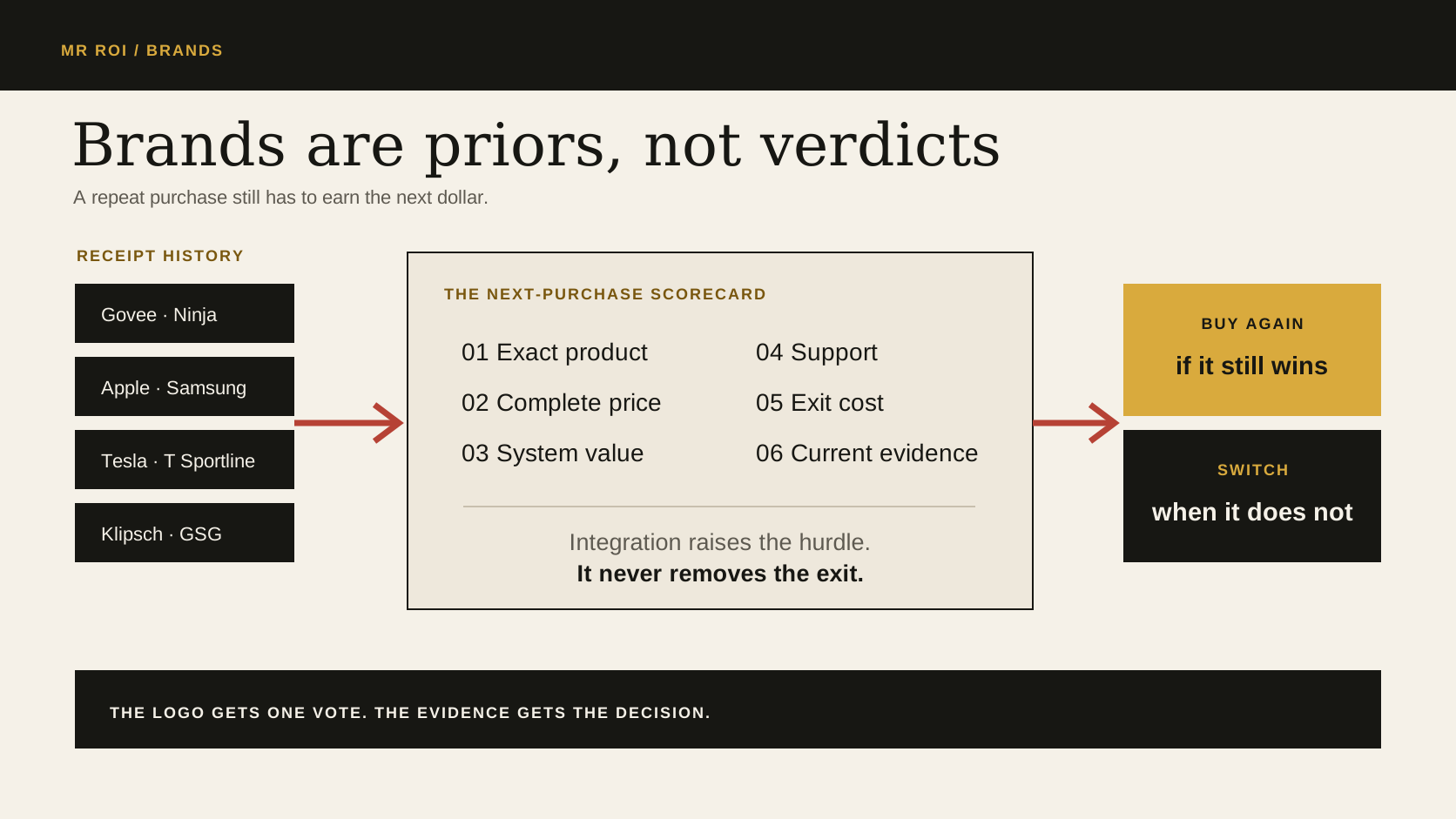
The Brands I Keep Buying and Why Brand Loyalty Is Still Stupid
A receipt-backed look at the brands that repeatedly win my money, the sale periods that change my timing, the switching costs that are real, and why no logo gets the final vote.
Read the article →
10 Hills I’ll Die On About Money, Status, Careers, and ROI
Ten strong positions on daily-driver value, home theater, traditional employment, status, diamonds, intelligent spending, FIRE, titles, and fixing the variable that actually moves the outcome.
Read the article →
The hidden cost of owning better stuff
Premium products can outperform and still reduce freedom. Price maintenance, storage, anxiety, compatibility, upgrade cascades, and resale first.
Read the article →
Stop being the subsidy: how to put yourself on the winning side of hidden cross-subsidies
A practical field guide to recognizing captive pricing, public benefits, employer benefits, memberships, investor-funded offers, and the fixed-price systems where high-use customers win.
Read the article →
The Mr ROI guide to reducing investment drag
A conservative order for reducing avoidable investment drag: expensive debt, employer match, liquidity, account tax treatment, fees, cash drag, and complexity.
Read the article →
The upper-middle sweet spot: buy the quality, skip the status premium
A practical framework for finding the value knee: enough performance, durability, and convenience to matter without paying heavily for prestige or tiny gains.
Read the article →
Vacation arbitrage without becoming the product
The best travel deals convert one costly layer into a controlled fixed cost, then survive a full accounting of time, fees, food, parking, transport, restrictions, and sales pressure.
Read the article →
Credit without games: the system I used from authorized user to mortgage
A practical credit system built around on-time payments, account longevity, sensible utilization, useful rewards, and borrowing options without score games.
Read the article →
The consumer-protection stack after checkout
Returns, warranties, service contracts, card disputes, and insurance solve different failures. Route the problem first and build the evidence file once.
Read the article →
The exit price: what new, open-box, refurbished, and used really cost
The cheapest listing is not always the lowest-cost ownership lane. Add repair risk, accessories, selling friction, and a conservative resale value before choosing how to buy.
Read the article →
Exactly how I run an optimized life without optimizing every minute
The practical operating layer behind Mr ROI: assigned accounts, a weekly review, repeatable meals, concentrated luxuries, a home built as infrastructure, and deliberate areas left alone.
Read the article →
Modern couponing without turning it into a second job
A five-minute transaction stack, one price-history check, narrowly defined alerts, and a stopping rule that protects attention.
Read the article →
Not every critic is a hater, and not every hater deserves a response
Being younger, intense, and publicly opinionated has attracted envy, cheap jokes, and real disagreement. The useful skill is not learning to ignore everyone. It is separating feedback that can sharpen the work from status attacks that only want attention.
Read the article →
I stayed home until 21 and moved directly into ownership. That was strategy, not failure.
Living with my mother gave me room to build credit, save, invest, and wait for an exit that improved my life. The strategy worked because I contributed, built independence before changing addresses, and left when work and housing conditions made the move rational.
Read the article →
When optimization becomes negative ROI: the research-time stopping rule
Keep researching while the next information can improve the decision more than waiting costs. Then run a bounded test and learn from the result.
Read the article →
Lifestyle arbitrage: build a premium life without paying premium prices everywhere
I am not interested in looking frugal. I am interested in controlling the few costs that determine whether expensive hobbies and long-term freedom can coexist.
Read the article →
The salesperson is solving their problem, not yours
The person across the counter may be helpful and honest. Their inventory, commission, schedule, and margin still shape the answer you receive.
Read the article →
Intentional excess: the categories where I deliberately stop being frugal
Fund stability first, spend boldly in a few named categories, and keep the rest ordinary enough that the priorities remain real.
Read the article →
When one household electronics plan beats a pile of gadget warranties
Most extended warranties are weak bets. A broad plan can be different, but only when the covered asset pool and contract terms survive real math.
Read the article →