
Lifestyle arbitrage: build a premium life without paying premium prices everywhere
I am not interested in looking frugal. I am interested in controlling the few costs that determine whether expensive hobbies and long-term freedom can coexist.
In brief
What I learned
Lifestyle arbitrage means lowering the cost of an experience without lowering the experience itself. Attack housing, transportation, recurring services, and idle space before obsessing over small purchases.
Use structural advantages such as living at home strategically, choosing a lower-cost base, driving an efficient daily vehicle, buying loss leaders, and building hobbies into the home.
Spend the savings on freedom, resilient finances, and a few high-use luxuries. If the system merely creates more consumption, it is not arbitrage.
Frugality and lifestyle arbitrage are not the same
I like expensive experiences. I just don't want the recurring bill that usually comes with buying everything at full retail. Used equipment, carefully timed upgrades, and avoiding costs that add little to my life have let me put more money into the things I actually use.
The answer is not to buy the cheapest version of everything. It is to stop paying premiums that do not survive daily use. I would rather own a few unusually good systems and keep dozens of low-impact categories ordinary than spread money evenly across a lifestyle designed for appearances.
The lifestyle I enjoy would look more expensive if I bought everything new, paid retail by default, and upgraded on the manufacturer's schedule. I haven't needed a miracle income to improve the experience. I've needed good timing, selective used purchases, patience, and restraint in categories I care less about.
Start where the budget is actually heavy
Housing and transportation accounted for more than half of average U.S. household spending in the Bureau of Labor Statistics' 2024 data. That is the first clue. A cheaper phone plan is useful, but a sensible housing choice, an efficient daily vehicle, or a shorter ownership chain can change the budget at a different scale.
I think in fixed-cost layers. Housing establishes the monthly base. Transportation determines payment, insurance, energy, maintenance, and time. Debt determines how much of the future has already been sold. Recurring services quietly claim what remains. These categories deserve aggressive analysis because a good decision repeats automatically.
Small optimizations still have a place. I use warehouse clubs, price history, discounts, and alerts. I just do not confuse saving a few dollars on groceries with solving an oversized house, vehicle, or financing decision.
The Mr ROI Operating System is the broader method for deciding which tradeoffs deserve money, time, or attention.
- Layer
- Housing
- Arbitrage move
- Choose location, size, and timing for total value
- Failure mode
- Buying prestige space that creates permanent overhead
- Layer
- Transportation
- Arbitrage move
- Use a capable, efficient daily and avoid churn
- Failure mode
- Treating every upgrade as a new identity
- Layer
- Food
- Arbitrage move
- Use warehouse pricing, loss leaders, and simple meal systems
- Failure mode
- Buying bulk that becomes waste
- Layer
- Fitness
- Arbitrage move
- Build convenient training around proven habits
- Failure mode
- Buying equipment to manufacture motivation
- Layer
- Entertainment
- Arbitrage move
- Invest in reusable home experiences
- Failure mode
- Collecting gear instead of using it
- Layer
- Technology
- Arbitrage move
- Automate repeated friction
- Failure mode
- Subscribing to tools without a recurring job
The point is not to make life smaller. It is to stop funding low-value defaults so the parts you love can be unusually good.
Living at home can be strategy, not stagnation
Moving out at eighteen is often treated as a moral achievement. It can be the right move for safety, work, education, relationships, or independence. It can also be an expensive performance of adulthood that transfers a young person's most flexible years into rent, deposits, furniture, utilities, and financing.
Staying with family longer gave me runway. The value was not just the avoided rent. It was the ability to finish school, make mistakes at lower consequence, build career momentum, and buy durable things without every decision competing with survival. That advantage only works when it is used intentionally. If the saved housing cost disappears into random consumption, the opportunity was wasted.
There is also a point when staying becomes expensive in a different currency. Growth, privacy, relationships, geography, and exposure to new people can justify leaving. The correct rule is not stay forever or move immediately. Stay while the arrangement creates measurable runway, contribute fairly, and leave when independence produces more growth than the subsidy produces savings.
Use the right machine for the repeated job
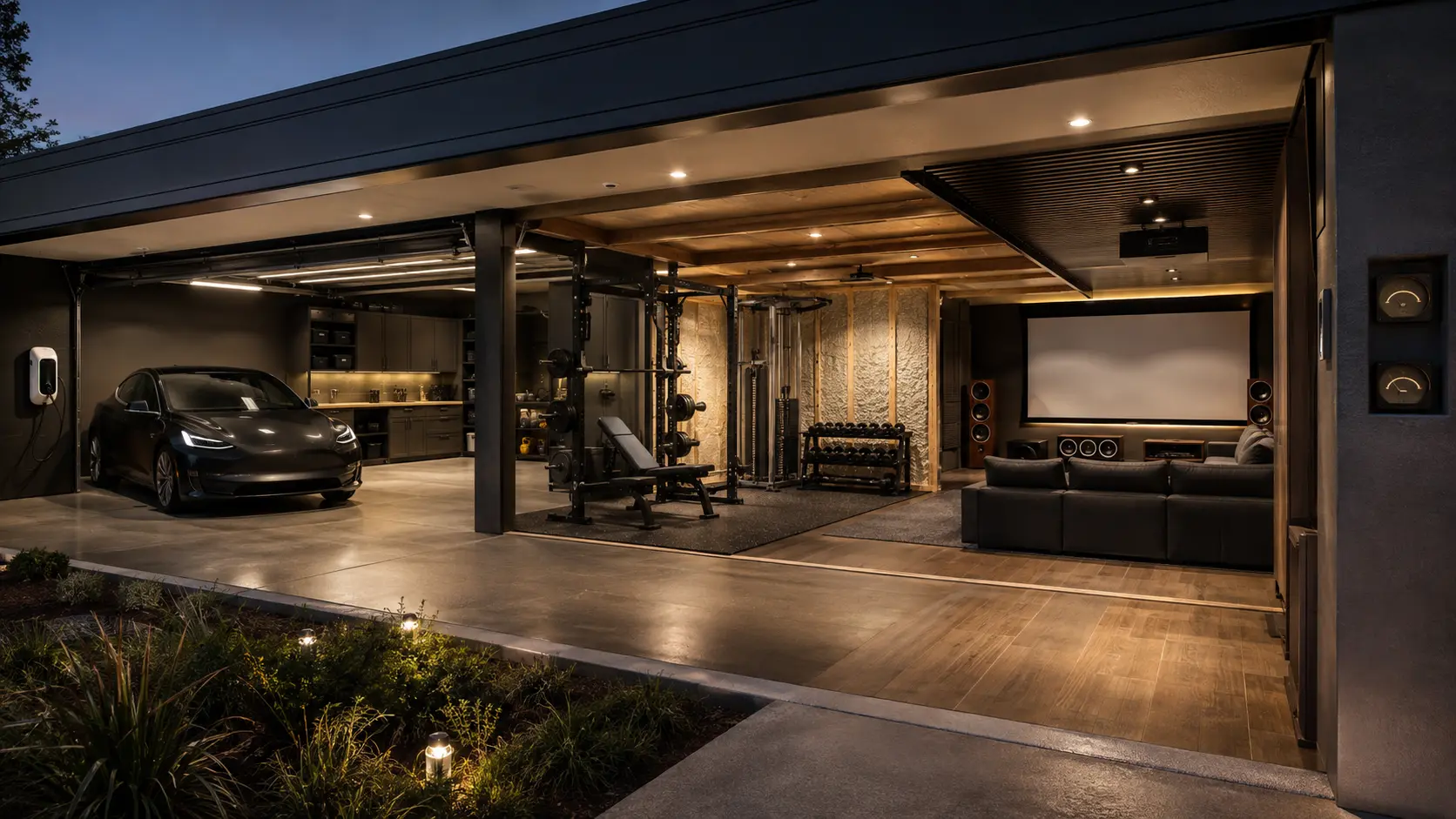
My Tesla is a good example of lifestyle arbitrage because it combines several jobs. It is quick enough to satisfy the performance-car part of my brain and practical enough to use daily. Home charging is easy, and the car is mechanically simpler than the exotic or high-output gasoline alternatives I enjoy. I still pay for tires, insurance, depreciation, and electricity. The advantage is not free transportation. It is receiving a premium daily experience without maintaining a separate luxury, commuter, and performance solution.
Traffic makes the value more obvious. Instant response, one-pedal driving, driver assistance, and high efficiency in city conditions reduce friction in the environment where many performance cars are least enjoyable. The Department of Energy notes that regenerative braking recovers energy otherwise lost and that electric drivetrains are far more efficient than conventional ones. The engineering happens to align with the use case.
The same principle applies everywhere: consolidate multiple repeated jobs into one capable system, then keep it long enough for the setup cost and learning to pay back.
Bring expensive experiences home
A home gym and home theater can look like indulgences until they replace recurring friction. The gym removes travel, waiting, weather, and schedule dependence from a habit I already practice. The theater turns ordinary nights into a high-quality experience that can be repeated with family and friends. Both become better investments as usage rises.
Build around the experiences you already enjoy. My audio system earns its space because I care about sound and use it. A rack of untouched exercise machines would be expensive storage.
I also favor systems that can be improved in stages. Add the core capability first, measure the bottleneck, and upgrade only when the next improvement will be used. A modular hobby is easier to finance intelligently than one giant purchase made before you understand your own preferences.
What the system looks like in my actual life
Here are the trades that made the difference. In each case, the money saved had a specific next use.
The pattern is consistent: reduce a repeated cost or combine several jobs, then direct part of the gap toward an asset, skill, experience, or reserve that improves the next decision.
- Category
- Housing
- The concrete move
- Stayed with family through age 21, contributed, learned household responsibility, and left when work and the family move changed the equation
- What it unlocked
- Moved directly into a home instead of adding an apartment phase by default
- Guardrail
- The runway needed to build credit and capability, not subsidize random consumption
- Category
- Transportation
- The concrete move
- Used one Tesla as commuter, performance car, road-trip tool, and technology hobby
- What it unlocked
- Avoided maintaining separate practical and fun cars
- Guardrail
- Count insurance, tires, depreciation, charging, and repair access before calling it cheap
- Category
- Fitness
- The concrete move
- Built training around a home rack, dumbbells, bench, and cable work after years of proven gym behavior
- What it unlocked
- Recovered commute and waiting time and made low-energy workouts easier
- Guardrail
- Add equipment only when a repeated movement or household user earns the space
- Category
- Entertainment
- The concrete move
- Built the theater in stages from used entry gear to a serious 7.4.4 system
- What it unlocked
- Made movies, games, sports, music, and social nights repeatable at home
- Guardrail
- Measure the bottleneck and keep hobby spending separate from necessity
- Category
- Shopping
- The concrete move
- Use Google, price history, Slickdeals, warehouse clubs, open-box inventory, and a dedicated deals inbox
- What it unlocked
- Better prices without checking every retailer every day
- Guardrail
- Set the product, target price, seller rules, and deadline before the alert
- Category
- Cash
- The concrete move
- Keep short-term reserves earning competitive interest and automate transfers
- What it unlocked
- Money assigned to near-term needs still works while preserving access
- Guardrail
- Do not chase a small yield difference into weak access, fees, or unnecessary account churn
Concrete arbitrage moves by time horizon
This week, cancel or renegotiate one recurring charge and get three insurance quotes. Create a separate deals email, move one planned purchase to a price alert, and prepare two repeatable meals that remove expensive low-energy decisions. These moves are small, but they create clean feedback quickly.
This month, audit the four expensive structures: housing, transportation, debt, and recurring services. Calculate annual cost, hours consumed, and what would have to be true for an alternative to win. One roommate, shorter commute, used vehicle, refinance, or deleted subscription bundle can matter more than a year of coupons.
This year, build one reusable experience around a proven habit. That might be a compact home gym, a serious desk and monitor setup, a basic 3.1 theater, a cooking station, or a travel fund. Start with the minimum system that changes behavior, track use, and add only what the usage log exposes.
- Weekly: remove one recurring annoyance or cost.
- Monthly: review housing, transportation, debt, and subscriptions before small categories.
- Quarterly: sell one failed experiment and move the proceeds toward the next approved goal.
- Yearly: choose one high-use environment to improve and one prestige expense to stop funding.
Loss leaders that are actually useful
Warehouse rotisserie chicken, inexpensive fuel, member optical or tire services, and discounted staples can lower the cost of needs that already exist. The win is strongest when the location is already on the route and the quantity fits storage. Driving across town to save on one item or throwing away half a bulk package reverses the trade.
For entertainment, discounted theater memberships, matinees, library access, free community events, and Groupon-style first visits can preserve variety without turning every weekend into premium admission. The offer should introduce a real activity, not create a habit of buying activities because the crossed-out price looks exciting.
For technology and big-ticket purchases, Slickdeals history and open-box inventory can reveal the real street price. I would rather buy last year's proven flagship with a full return path than this year's midrange product at launch. The warranty and return path are part of the price, especially for giant televisions and complicated equipment.
Exploit loss leaders without becoming the product
Warehouse clubs, restaurant promotions, memberships, credit-card offers, group discounts, open-box inventory, and time-limited trials can subsidize real life. I use them when the discounted item was already approved, the conditions are clear, and the program does not create a larger stream of unnecessary buying.
The trap is letting the mechanism set the agenda. A warehouse membership is valuable when staple savings, fuel, delivery, warranties, or services exceed the fee. A restaurant deal is valuable when it replaces spending that would have happened anyway. A timeshare presentation can theoretically subsidize a vacation, but the pressure, time, restrictions, and cancellation risk belong in the cost.
My rule is simple: the deal may change where or when I buy. It does not get to create the need.
- Count travel, storage, cancellation work, and attention as costs.
- Use a separate deals inbox so promotions do not control the primary inbox.
- Cancel memberships that no longer win without optimistic assumptions.
- Never finance discretionary consumption to preserve the appearance of savings.
Protect the gap
Lifestyle arbitrage creates a gap between what an experience feels like and what it costs. That gap is valuable only if some of it becomes resilience or future freedom. If every saving is immediately converted into another upgrade, the lifestyle may look optimized while the balance sheet remains fragile.
I divide the benefit mentally. One part funds the next useful improvement. One part protects savings, flexibility, and long-term goals. The split keeps optimization from becoming a permission structure for endless consumption.
The system should make life feel abundant now and more optional later. If it accomplishes only one side, it is incomplete.
Keep the lifestyle gap intact
I am not trying to own the fewest things or prove I can survive on the lowest budget. I want room for a fast daily car, serious audio, a home gym, useful technology, and the freedom to say no to expenses I don't value. Spending freely in a handful of categories only works because I refuse to let every category become a luxury category.
Attack the largest fixed costs, keep the ordinary categories ordinary, and build premium experiences around habits you already have. Then protect part of the savings instead of spending it twice.
Lifestyle arbitrage is not about looking rich for less. It is about building a life that feels expensive because the useful parts are excellent, while the underlying system remains sane.
Sources
Disclosure
Some links may earn Mr ROI a commission at no added cost to you. That does not change the recommendation. This is general information, not personal financial or medical advice. Read the full disclosure.