
Why Tesla Can Be the Best Overall Daily Car
Why performance, home charging, software, audio and everyday automation make Tesla an unusually strong daily-driver system when the ownership conditions fit.
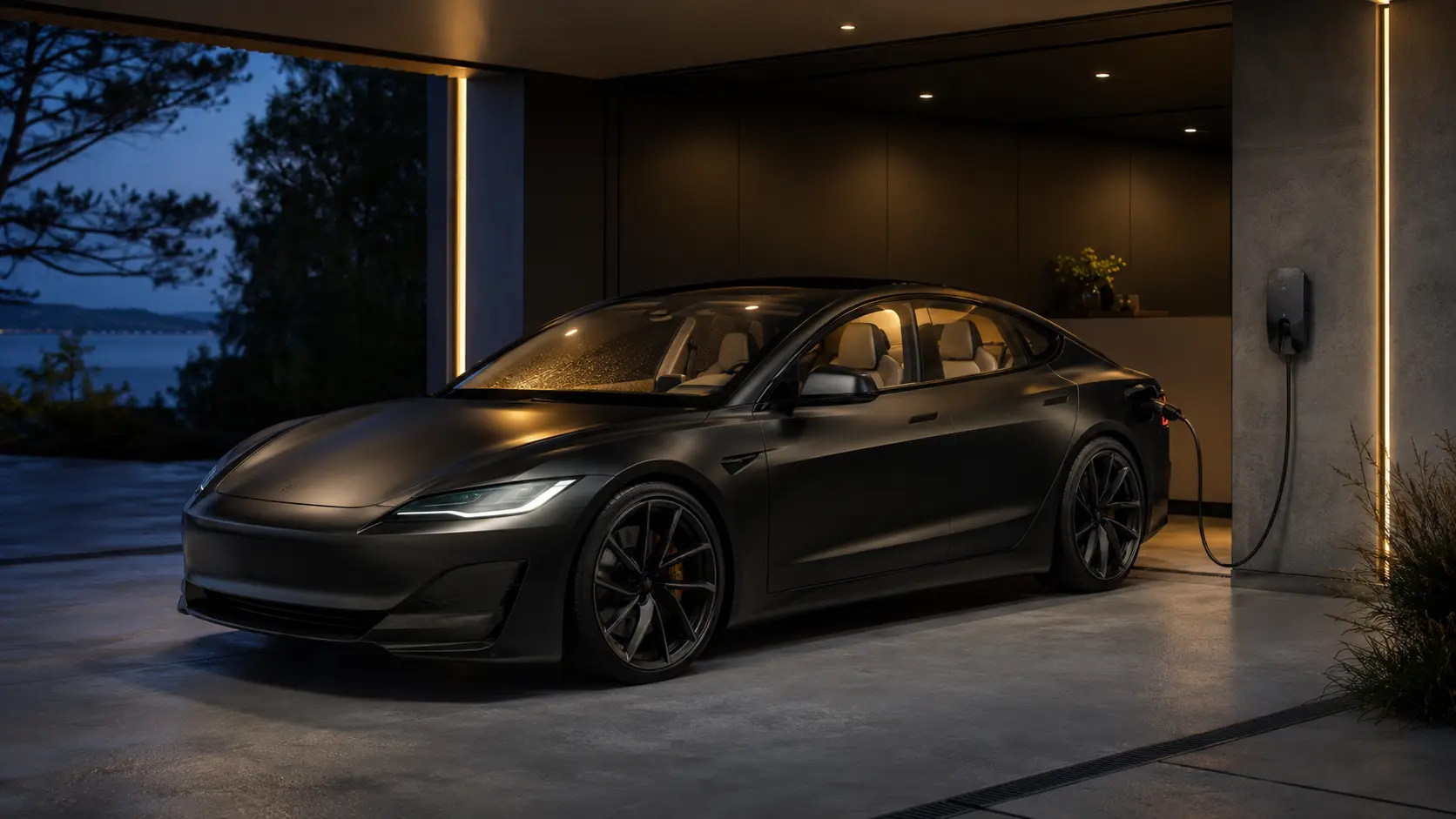
After roughly 60,000 miles in my Model 3 Performance, I'm still looking for a daily driver that does the whole job better. Other cars can beat it on an individual feature. The hard part is replacing the acceleration, charging routine, software, audio, and convenience together without spending substantially more.
For a buyer with reliable charging who values performance, software, audio and automation, Tesla can be one of the strongest overall daily-driver choices. The cheapest transportation and the highest-value daily car are not necessarily the same purchase.
Tesla's real advantage is the integrated stack
After living with my Model 3 Performance, I care less about which car wins each spec-sheet category and more about how well everything works together. Acceleration, navigation, charging, climate, audio, and the phone app reinforce each other. That convenience is easy to undervalue until another car makes you manage those pieces separately.
Consider a normal ownership flow with the relevant settings enabled:
- The cabin preconditions before departure, either on a schedule or from the app.
- I approach with a paired phone key. My linked driver profile recalls the seat, mirrors and driving preferences.
- The electric drivetrain responds without a downshift or turbo spool-up.
- Navigation estimates remaining battery energy and adds charging stops when needed.
- Routing to a Supercharger prepares the battery for charging; I can monitor the session from my phone while taking a break.
- At home, I plug in and let the car charge while I sleep.
The vehicle, energy management and mobile controls belong to the same workflow. Tesla documents these functions in its app support, owner's manual and Trip Planner guidance.
An excellent app cannot rescue poor charging integration. A powerful drivetrain loses some daily value if it is awkward to deploy. Tesla's strength, for my priorities, is that these pieces generally reinforce one another.
The best comparison is a normal day with each car: getting in, driving, charging and getting on with life. That is where integration earns its value.
Home charging removes an errand
Home charging is a convenience upgrade I would hate to give up. The car refuels while I do something else, usually sleep, instead of creating another errand. Even at identical fuel cost, that recurring time savings would matter to me.
For energy costs, compare delivered electricity price multiplied by wall-to-wheel kWh per mile against gasoline price divided by real-world MPG. Include charging losses and the installation cost. Keep depreciation, insurance and tires in the full ownership calculation rather than pretending energy savings settle it.
Without dependable home or workplace charging, this case becomes much weaker. Public charging can introduce detours, queues, parking restrictions and higher energy prices. An apartment resident with excellent workplace charging may have a strong EV use case; one relying on inconvenient fast charging may not.
For the cost calculation, use my Supercharger guide. At home, the biggest benefit is simpler: refueling usually happens while I am doing something else.
Preconditioning and access are everyday luxury
A comfortable cabin before I open the door is a benefit I use far more often than a decorative trim upgrade. Cooling a hot car, warming it before departure and defrosting remotely make ordinary ownership better.
Tesla supports scheduled cabin and battery preconditioning through the car or app. When plugged in, conditioning can draw external power, preserving more stored energy for the drive. A weak household outlet may not cover the load in severe cold. Tesla's cold-weather guidance explains those limits.
Remote start and remote climate exist elsewhere. What I value here is their relationship with charging schedules, battery preparation and the same app I already use for the car.
Phone-key access means I can walk up and get in without fishing for a key. Keep a backup key card for a dead phone or connection problem.
Tesla's native Apple Watch app adds key access, climate activation, charge status and frunk/charge-port controls. Support requires compatible devices and software; Tesla currently specifies watchOS 11 or later, app 4.39.5 or later and vehicle software 2024.44.25 or later. Check Tesla's compatibility requirements for the vehicle and watch you own.
Performance without a separate performance-car lifestyle
The valuable part of an electric drivetrain is its response. During a merge or pass, I do not wait for a gearbox to choose a ratio or an engine to reach its interesting rev range. The car delivers strong acceleration through an ordinary accelerator input.
Battery temperature, charge level and tires affect available performance. Choose tires for the weather you drive in; AWD helps put power down, while grip still governs braking and cornering.
The September 16, 2026 comparison used Tesla's US Model 3 Performance specifications: dual-motor AWD, 309 miles of EPA-estimated range and 2.9 seconds to 60 mph with rollout subtracted. It also has five seats and 24 cubic feet of combined cargo capacity. Tesla Model 3 specifications.
The launch number is impressive. The daily combination is more useful: four doors, passengers, trunk and frunk storage, quiet commuting, instant response and overnight charging. It delivers much of the entertainment I would otherwise seek in a separate performance vehicle.
There is no premium gasoline, engine-oil service or turbocharger upkeep attached to that acceleration. Tires, suspension and repairs remain real costs. The Performance trim also trades some efficiency and ride comfort for capability; a less aggressive configuration may be the better daily purchase.
That combination also changes what an expensive enthusiast car has to offer. I explore the trade in the performance-car economics article.
Software, navigation and charging work together
Tesla treats software as part of the vehicle throughout ownership. OTA updates can add or modify functions after delivery, spanning far more than the entertainment screen.
The value is in what the software connects: vehicle settings, driver profiles, climate, energy management, navigation, charging and mobile access. These are controls I use to run the car, not just entertainment features on a screen.
When buying, value the functions already available on that car. Updates can keep ownership fresh, but hardware determines which future capabilities an older Tesla can receive.
Road trips require fewer separate decisions
Trip Planner combines the route with battery needs. It can add Supercharger stops, estimate arrival charge and recommend how long to charge. Routing to a Supercharger can automatically preheat the battery before arrival. That removes work an owner would otherwise perform with separate maps and charging apps. Tesla Trip Planner guidance.
Tesla's charging map also exposes site availability. The network is no longer a Tesla-only advantage: many other EVs can use compatible Superchargers through native NACS ports or approved adapters. Access depends on the vehicle and station, rather than the connector shape alone. Tesla's other-EV charging guidance.
Gasoline still replenishes faster. The right combustion vehicle can be an easier tool for frequent extreme-distance travel, remote routes or towing. Charging stops can also coincide with meals and breaks, but I would not assume every stop is free time.
I compare total inconvenience across my actual year. Overnight charging can remove enough routine errands to outweigh occasional longer road-trip stops. A driver with a different travel pattern can reach the opposite conclusion.
Efficiency makes the whole system more useful
Efficiency determines how far each unit of stored energy carries the car. It affects electricity spending, range from a given battery and the miles recovered from a charging session.
As a simple illustration, 20 kWh supports about 80 miles at 4 miles/kWh, versus 60 miles at 3 miles/kWh. Those are hypothetical efficiencies, with charging losses excluded. The same energy produces one-third more travel in the more efficient car.
For a given range target, efficiency can also reduce required battery capacity, cost and mass. Actual stop length depends on the charging curve, temperature, starting charge and charger output.
Independent tests show why trim matters. Car and Driver's 2024 Long Range RWD test returned 310 miles at 75 mph; its 2024 Performance returned 260 miles. Car and Driver's test data.
I care about range where it matters: on the routes I actually take, at real highway speeds, with enough margin that charging never becomes a guessing game. EPA range is useful for comparisons, but temperature, speed, wheels, and elevation can change what I experience. I would rather have dependable route flexibility than the biggest number on a sticker.
Regenerative braking and simpler routine upkeep
One-pedal driving changes ordinary traffic more than a specification sheet suggests. Lifting the accelerator slows the car while recovering energy, reducing the number of transitions between pedals. I value that smooth speed control as a quality-of-life feature.
Regeneration can be limited by battery condition or temperature, and the brake pedal remains necessary when required. Reduced friction-brake use does not eliminate inspection, corrosion or service.
Tesla's maintenance guidance covers tires, filters, brake-fluid condition, brake care and other condition-dependent items. It recommends Model 3 cabin filters every two years and brake-fluid contamination checks every four years. Salted-road use calls for additional brake cleaning and lubrication.
The basic distinction is mechanically meaningful: there is no combustion engine requiring oil changes, spark plugs, exhaust repairs or ignition-system maintenance. There is also no conventional multi-speed engine/transmission combination to maintain.
I value the shorter service list because it removes recurring jobs. I still budget for tires, suspension, HVAC, electronics and larger repairs.
Use the long-term Model 3 maintenance guide for the detailed service plan and battery-aging considerations. For tire cost and wheel tradeoffs, see the Model 3 Performance 18-inch wheel guide. Wheel fitment is specific to the model year and brake package.
Audio and assistance add value to ordinary miles
Strong factory audio is part of the bundle
Audio is a serious hobby for me, so a weak factory system would be a daily compromise. My Model 3 Performance's factory audio is one of the reasons the car works so well as an overall purchase.
In its June 2022 comparison, WIRED rated the Model 3 Long Range/Performance premium audio system 9/10, praising its spacious presentation, detail and bass. That is substantial audio capability bundled into the car.
Listen to the exact trim with familiar music. Tesla has changed equipment across configurations and years. A system bundled into a trim I already want can offer excellent value without a separate prestige-branded audio package. Buying a much more expensive trim solely for its speakers is a different calculation.
My bass expectations are unreasonable by normal-car standards: I want the kind of impact you feel through your body. The stock system already sounds excellent to me, with bass integrated well into the music. My custom subwoofer build was about chasing that extra physical punch.
Autopilot and FSD make driving easier for me
Autopilot and FSD (Supervised) are among my favorite parts of owning a Tesla. They take over enough of the driving execution that normal trips feel much less tedious, and the improvement is substantial in my daily use. Another car would have to be excellent in other ways to make me willingly give this up.
FSD (Supervised) still requires my active attention and readiness to take over. Supervision and assistance coexist: I remain responsible for the drive while the system handles much of its execution.
Try it on roads you use, with the hardware and software of the car you are considering. My experience has been strongly positive, and a relevant test drive is the best way to see how much you value that assistance.
Check what FSD access is included with the car and price any required subscription into ownership. For a used Tesla, verify the entitlement separately from the seller’s trial or subscription.
Functional luxury, better refinement and real competition
Traditional luxury and functional luxury reward different priorities. Both can create genuine value, and the best alternatives may combine them.
| Kind of value | Examples | Why I would pay for it |
|---|---|---|
| Materials and craftsmanship | Upholstery, switchgear, trim, assembly and finish | Comfort, tactile satisfaction and lasting quality |
| Refinement and service | Noise isolation, ride control, dealership treatment | Less fatigue and better support when something goes wrong |
| Functional luxury | Preconditioning, home charging, app/key access, routing, automation and assistance | Fewer repeated actions and a more convenient daily routine |
I enjoy a well-made interior, but the conveniences I use every day carry more weight for me. Once the seat and ride are comfortable, I would rather have excellent climate controls, charging integration and driver assistance than pay mainly for decorative upgrades.
The refreshed Model 3 deserves a current assessment
Car and Driver found the 2024 Model 3 refresh quieter and more comfortable, with better interior materials. The Model 3 then made its 2025 10Best list. Those improvements address everyday comfort on top of the strengths I already enjoy in my 2022 car.
Consumer Reports' December 2025 survey reporting placed Tesla ninth in new-car reliability, up eight positions, with fewer reported problems in several quality categories. Its current 2026 Model 3 prediction is about average. CR's survey, Model 3 reliability.
Judge the model year you are buying. The improvements matter, and older reviews can miss them.
A cheaper hybrid can win cost while Tesla wins utility
A Prius or similar efficient hybrid can deliver lower transportation cost for a buyer prioritizing reliable, inexpensive mobility. Insurance, purchase price, resale and access to service may matter more than electricity savings.
My budget also buys performance, AWD traction, audio, technology, app integration and fewer routine fueling and service errands. Those capabilities have value because I use them. A higher price can be justified without pretending the purchase is the cheapest way to commute.
Other EVs have credible answers
Competitors offer serious alternatives, including efficient drivetrains, 800-volt charging architectures, fast replenishment, better interiors or physical controls, capable apps and sometimes longer warranty coverage. For example, Hyundai documents 800V charging and battery preconditioning for the 2026 IONIQ 5 specifications.
Compare the whole trip: charging time, range, network access, software, audio, assistance and comfort. Then add warranty and local service. Tesla has to earn the purchase through how well that package works for you.
Where Tesla loses, and when I would stop shopping
The positive case is strong only if the ownership conditions work. These are the disadvantages I would price or test before buying.
| Issue | What changes the decision |
|---|---|
| Charging access | Routine public-charging detours can undermine convenience and energy savings. |
| Insurance and collision repair | Obtain an exact-VIN quote, repair-network information and realistic backup transport coverage. |
| Service geography | Long distances, appointment delays or limited repair options can overwhelm normal convenience. |
| Depreciation | A low purchase price does not guarantee a strong future resale price. |
| Controls and materials | Touchscreen dependence, cabin finish or ride can be daily irritants. Tesla does not offer CarPlay or Android Auto. |
| Winter and highway range | Plan the difficult normal route with weather, reserve and aging margin. |
| Tires and suspension | Exact fitment, alignment, road conditions and driving style determine costs. |
| Battery replacement risk | Out-of-warranty pack failure is a potentially large loss, distinct from gradual capacity decline. |
The current US Model 3 Performance battery/drive-unit warranty is eight years or 120,000 miles, whichever comes first, with minimum 70% capacity retention. Basic coverage is four years or 50,000 miles. Confirm the original documents and remaining coverage for a used VIN. Tesla warranty terms.
My eligibility screen: reconsider Tesla if any of these fail:
- Reliable charging is unavailable.
- Exact-VIN insurance is unreasonable.
- Normal worst-case travel exceeds practical range.
- Service access is unacceptable.
- You dislike the actual seats, controls or ride.
WAIT if your current car already meets the need or a move could remove charging. PASS if the ownership mismatch is fundamental.
Used value and the hurdle for replacing my Tesla
Depreciation creates opposite outcomes for consecutive owners. The first can absorb a painful loss while the next buys much of the same capability at a lower entry price. That is why I care about used configuration, condition and remaining warranty together.
Installed options can improve the deal when they match what I would have bought anyway. Protective film, tint, useful wheels, charging equipment and genuinely included software can save recreation cost. They deserve no automatic credit at original retail prices.
My used black Model 3 Performance came with protection and accessories I valued. The relevant question was what I would otherwise spend to recreate that condition and configuration. An unwanted modification adds no utility; a poor installation may create removal cost or repair risk.
As a hypothetical example, good tint that would cost me $500 to install is worth at most my avoided expense, adjusted for condition. It does not make the car worth $500 more to everyone. Verify software entitlements and ownership-transfer details separately from the seller's description.
For a replacement decision, compare the current car's market value and future costs with the alternative. Money already spent is sunk. Keep the useful installed equipment in the utility comparison without counting its original bill as recoverable cash. The EV upgrade framework handles that transaction math.
What would make me leave
A competitor could win through equally useful software and assistance, better charging and range, superior refinement, strong audio, comparable performance or better service economics. The improvement must be large enough to offset price and switching friction. Tesla receives no exemption from that test.
For now, my ownership case is the interaction: charging while I sleep, preconditioning before departure, phone access, immediate AWD performance, battery-aware routing, charger integration, software, audio and simpler routine upkeep. Then the same car carries people and luggage like an ordinary sedan.
Tesla does not win every category. Very few cars, however, ask me to give up so little while providing so many useful capabilities every day. That is why I actively choose it, and why the benchmark should move whenever the evidence moves.
Sources
- app support
- owner's manual
- Trip Planner guidance
- Tesla's compatibility requirements
- Tesla Model 3 specifications
- OTA updates
- Tesla's other-EV charging guidance
- Car and Driver's test data
- maintenance guidance
- WIRED's audio comparison
- Tesla's FSD support documentation
- CR's survey
- Model 3 reliability
- 2026 IONIQ 5 specifications
- Tesla warranty terms
Disclosure
Some links may earn Mr ROI a commission at no added cost to you. That does not change the recommendation. This is general information, not personal financial or medical advice. Read the full disclosure.